Why cheap tint turns purple
Dyed film gets its color from dye in the adhesive layer. UV breaks the dye down and the film shifts purple; heat then attacks the adhesive and it bubbles. In South Florida that is a two- to four-year cycle. Ceramic film gets its performance from ceramic particles that do not fade, and the adhesive is built for heat. It stays the color it was installed.
What kills any tint
- Ammonia glass cleaners. They attack the film from the inside. Use an ammonia-free cleaner.
- Rolling the windows down in the first few days, before the film has fully bonded.
- Seat belts, rings and cargo dragged across the rear glass. Film scratches like anything else.
- Abrasive pads or razor blades on the inside of the glass.
What a lifetime warranty covers
Bubbling, peeling, cracking, delamination and color change. Not scratches, not damage from cleaners, not the factory defroster lines lifting film that was scraped. Terms are on our warranty page.
Replacing old tint
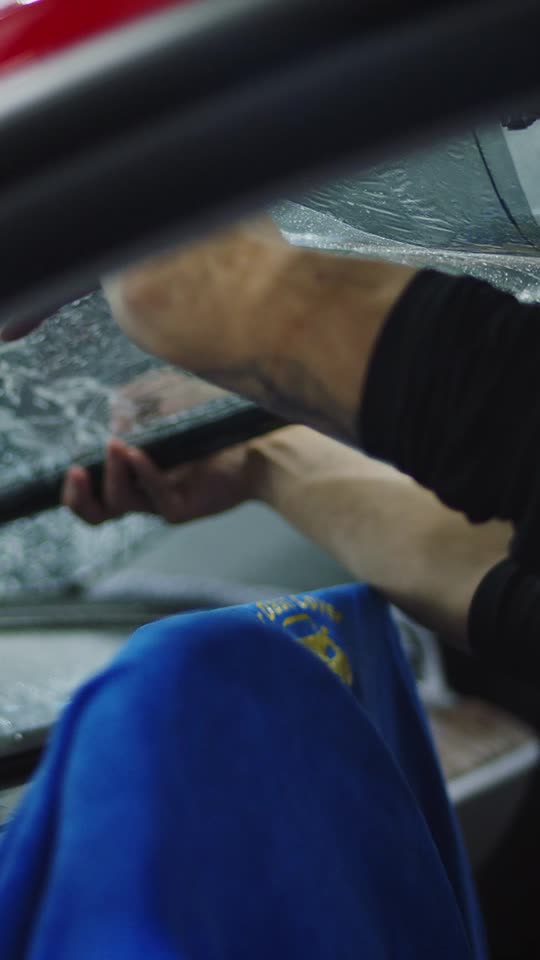
Removing failed purple film is most of the labor in a re-tint, especially on the rear glass where the defroster lines are. If you are replacing dyed film, replacing it with ceramic means you do it once.